
Excavator Hire in Nowra
Digging Jobs Handled End to End
Getting a machine onto a job in Nowra usually means dealing with two bookings: one for the excavator and another for whoever's going to run it. At Morgan Plant Hire, we handle excavator hire as one arrangement, with a ticketed operator on every machine.
We take on site cuts, house pads, footings, trenching, drainage, pool digs and detailed work around live services, matching machine size to the access rather than to what happens to be spare. Residential blocks, working commercial sites and civil contracts all get the same approach: a clear quote first, then a machine that turns up when it's booked.
Call us on 0401 256 483 and tell us what you're planning.
What We Take On
Excavator work varies a lot by site, and the machine that suits one job rarely suits the next.
Site cuts and house pads are stripped and levelled to the set-out you've had marked. Working to those levels from the start saves correcting them once formwork goes up.
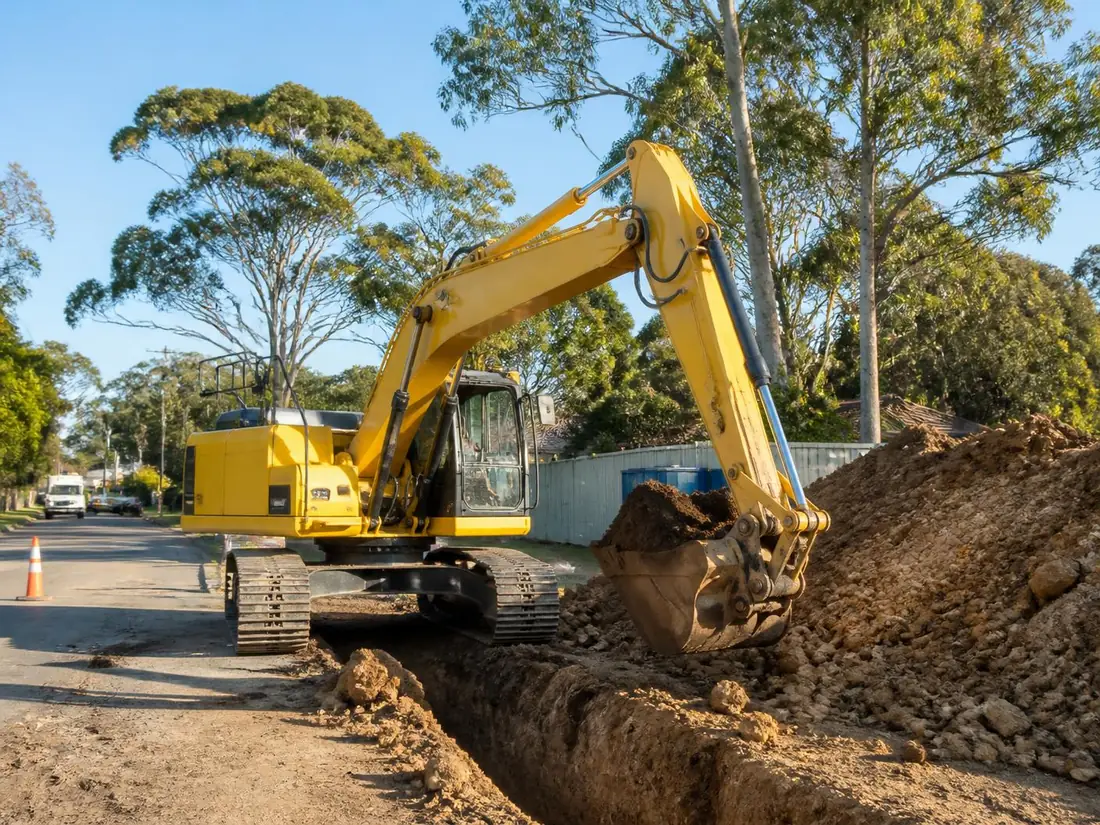
Trenching for stormwater, sewer, water and power runs to the depths and grades the plans specify. Spoil is stockpiled clear so the trench stays workable and easy to inspect.
Pool and landscaping excavation needs accuracy in a confined space, often with access as the limiting factor. A smaller machine can usually reach through side access where a full-size one can't.
Detailed work around live services calls for a slower, deliberate approach worked off marked plans. It's the part of a job where care costs far less than a strike does.
How a Hire Comes Together
Every hire runs the same way: you tell us about the job, we quote it, then we book the machine and operator in. Knowing the access width, the ground conditions, whether spoil is staying or going and what other trades are on site is usually enough for us to recommend a machine size and give you a price.
If material needs carting in or out, a tipper and driver can run alongside the excavator so nothing gets double-handled. If conditions change once we're on site, we'll tell you before the extra work happens rather than after.
FAQs
Sandy and loose ground can collapse into a trench and often needs battering back or shoring, while heavy clay holds its shape but digs slower and carts much heavier. Knowing the ground type before a machine is booked usually changes both the machine choice and the time allowed.
Clean spoil can sometimes be spread or reused on the same site if the levels allow it. Anything left over is loaded and carted away, which is usually planned into the job so stockpiles don't block access.
Underground services should be located through dial before you dig, and any survey pegs or set-out levels need to be in place. Clear access to the work area, including gates that can be opened or removed, makes a real difference to how the day runs.